

Todd Snap has done this before. He’s tall, with parted, wavy brown hair. There’s a solid-looking camera in his hand, more boxy and serious than yours, which looks like a smartphone with a thick lens attachment. He glances at your vehicle, the NEO-ONE, and sighs. “That brings back memories,” he says.
Todd was the protagonist of the first Pokémon Snap game, released in the nineties and only built upon two decades later in the sequel New Pokémon Snap for Nintendo Switch. He was gangly and awkward in his first outing, but now seems assured, and has taken on a photography apprentice, your rival Phil. Still, he doesn’t play favorites and is gracious in sparing advice to anyone. Here’s one that stood out to me:
Photographing wild Pokémon well takes patience. The mark of a pro is when you don’t just put in the time—you enjoy it.
I wholeheartedly agree with this sentiment, not just for “Pokémon Photography” but for creative work in general. There were long periods of my life when I believed in work and diligence, when I thought that sacrifice now would pay off in happiness later. I burned out. Work and diligence are worthy principles, but they’re not sustainable without happiness now. I’m still working to repair my relationship to art forms that I pursued for mastery rather than meaning, and now I look for ways to engage in creativity that are restorative, that feel less like work and more like joyful breath. I take it one day at a time.
Anyway, yes, I do agree with Todd. The problem is that New Pokémon Snap asks for more than your patience. It demands your time, and while the two are similar, they are also different in ways that make New Pokémon Snap fall short not just as a game, but as a creative endeavor. More on that later.
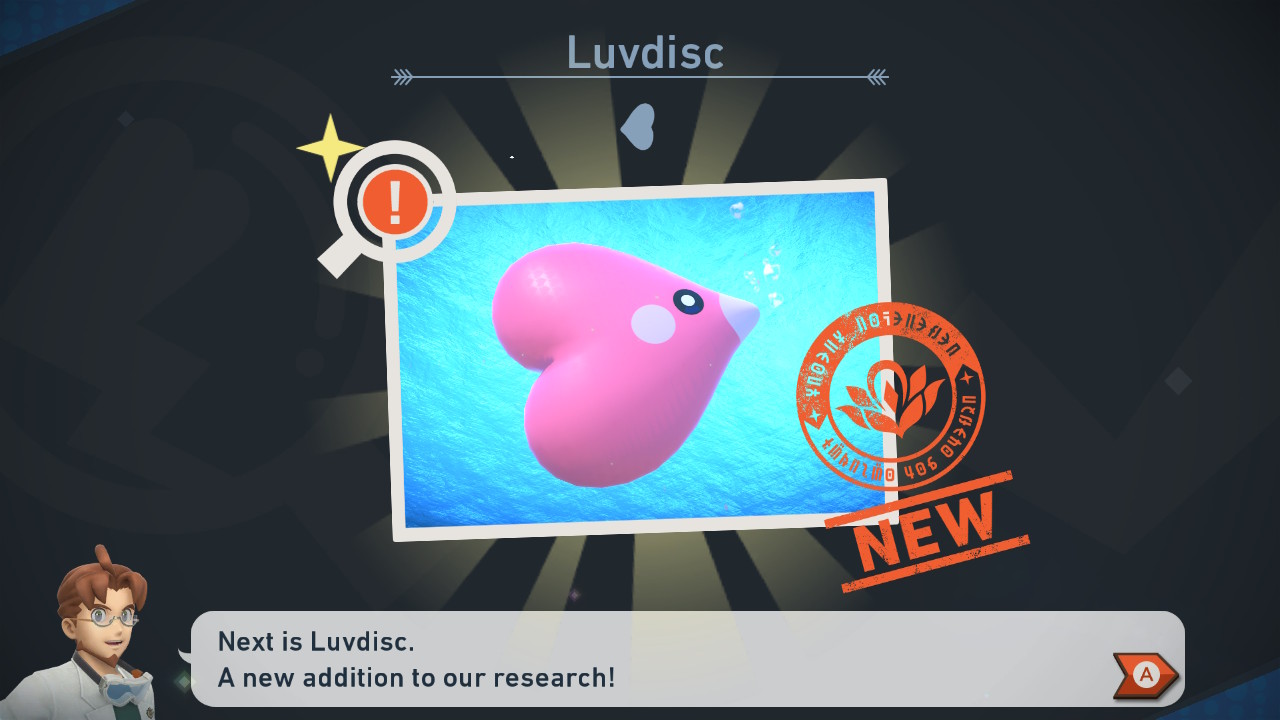
In New Pokémon Snap, you’re a recent arrival in the Lental Archipelago, apprenticed to Professor Mirror to aid in his research into the region’s Illumina phenomenon. The local Pokémon are said to glow in strange colors, usually at night, and usually under mysterious circumstances. Why is that? That’s what you’re tasked with figuring out. Armed with a point-and-shoot camera, some “light, harmless” apples to throw at monsters, and a few other gadgets, you’ll use photography to gather information about the environment and the Pokémon that live here. With enough work, you’ll solve the Illumina mystery, and become a great photographer in the process.
Key to this mission is your research vehicle. An evolution of what Todd used in the last game, the NEO-ONE looks like a massive bowl made of white and yellow metal, with a cushioned interior and a seat that can swivel in all directions. Attached to the sides are two wide canisters that make the whole contraption float in the air. Absent is a steering wheel: this is an on-rails experience, meaning that each excursion sees you floating through the environment on a guided path, using your tools to lure Pokémon into prime portrait positions, and to coax out interesting behaviors. You have limited time, and a maximum of seventy-two photos to use on each course. Be selective and efficient. Shoot to thrill.
The NEO-ONE takes you through roughly a dozen environments throughout Lental, all varied, colorful and wondrous. You’ll start in a temperate nature park, but soon you’re coasting through a jungle, and then along a beach. The NEO-ONE can even project a hard, transparent field around the cockpit, allowing you to pierce the heat of an active volcano and the weighted pressure of an undersea grotto. All of them are rendered beautifully. And then there’s the Pokémon.
On my first trip through the entry park, I saw Bouffalant meandering in the distance. Taillow darted in the grass under the trees. A large shape of tangled vines, fidgeting in sleep but otherwise unresponsive, sat on a dirt shelf and faced away from me. An Emolga glided overhead, passing so fast that I only caught its tail on film. And then my trip was over.
Professor Mirror brought me back to the lab and evaluated my photos. He ranks based on his own criteria: he wants as big a shot of the Pokémon as you can get without cutting part of it out of the frame. It should be facing the camera, and it should occupy the direct middle of the picture. Not criteria I would have chosen, but I suppose he’s a researcher and these guidelines may help in cataloguing the local fauna. I get it. Then he assigns me points and sends me back out to the park.
The Bouffalant are still in the distance. The Taillow still skit beneath the trees. The Emolga whooshes past overhead, on the same trail, and I again miss my shot. The Pokémon are all in the same places, acting out their same routine. My photos are better this time, now that I know the timing. Mirror is pleased, and awards me more points. The course “levels up.” And next time I visit, it’s different. The Pokémon come closer, posing for the camera. They’re more responsive to the fruit I offer.
“You’ve been there a few times now,” Mirror says. “So they’re getting more comfortable with you.”
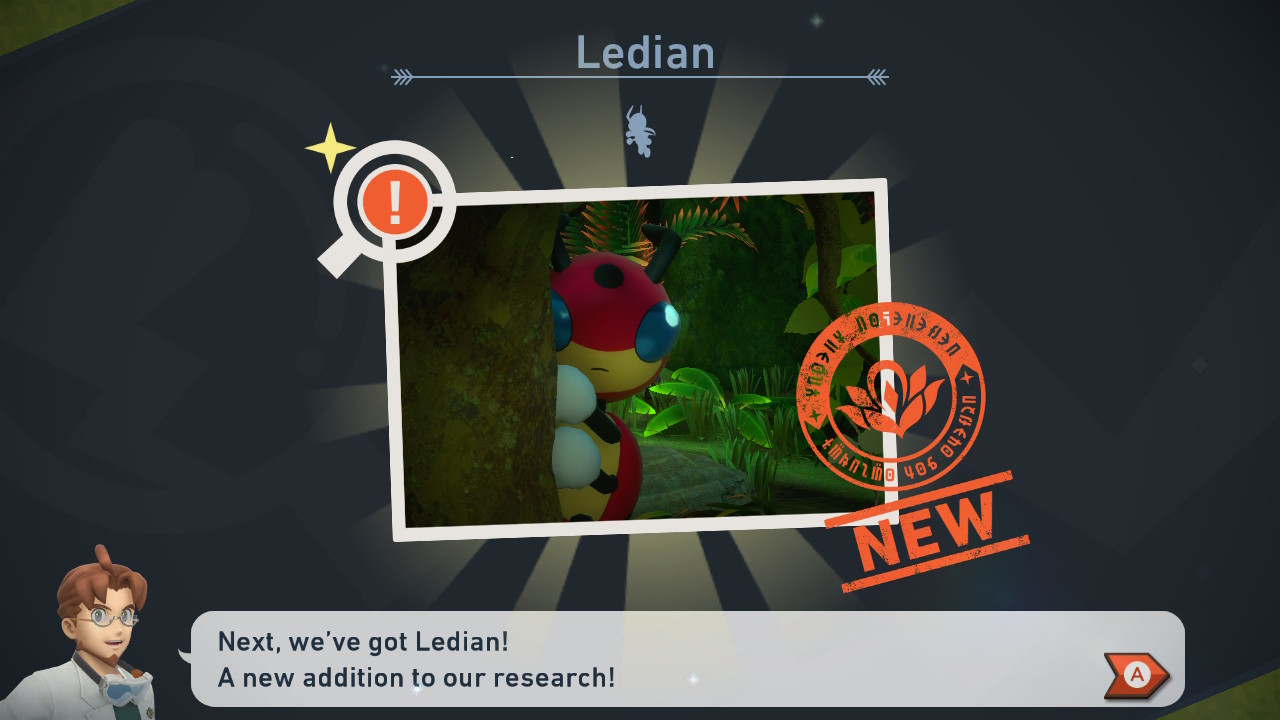
This is the New Pokémon Snap routine. You find a new course, you coast through, and you take photos. You get points; sometimes the course levels up, and sometimes you need more points, and another trip through the same thing. Eventually you get enough points to advance, whether that means unlocking a new version of the course (usually a night version to compliment your day trips) or a new area to explore on a different island. The problem here is that each time a course levels up, it doesn’t just change, it gets markedly better. The Pokémon who were skittish before are now curious, they walk right up to you. They’re more responsive to your photography tools, more willing to pose. The leveled up courses are just more fun than the unleveled ones. There’s no comparison. And further, Mirror’s explanation that the Pokémon are “getting more comfortable with you” simply isn’t true. I’ve been pelting them, constantly, with “light, harmless” apples. That doesn’t build rapport. The game simply decided I had put in the time for the course to become more interesting.
Todd says that “patience” is the mark of a pro photography, but patience can mean many things. There’s value in patience when it means being curious about your surrounding environment. There’s value in thinking about where your subject will be, and how you can entice them into the best position. There’s value in working to understand your subjects. But all of this value is lost when it’s met with certainty. A good wildlife photo is meaningful when it’s borne of the photographer’s understanding of the environment combined with the willingness to stick it out and get the best shot, not knowing if nature will be cooperative. However, New Pokémon Snap doesn’t ask for your patient understanding, it asks for you to grind. It asks you to see the Pokémon it scheduled for you, and then to do so again and again until it decides they can do something more interesting. Advancement doesn’t come from understanding, but from enduring a worse version of a course to reach a better one. What results is an experience that feels padded. If New Pokémon Snap granted access to the best versions of its course off the bat, the game would have been enjoyable and brief, a theme park worth a day trip. Instead, it took what’s good about the game and diluted it with worse versions of itself.
Patience is critical in any art form because good art will always take time, but there’s no need to artificially impede progress. New Pokémon Snap’s base levels lack the immediate verve of a good rail shooter, and also fail as a convincing nature simulator. The final versions of the levels are worth a trip, but not worth the work it takes to get there. Do yourself a favor: see if you know anyone who owns the game and has already unlocked all the courses. If you can play on their profile, you’ll have a fabulous afternoon instead of a tiring week.
Played for review on Nintendo Switch.

